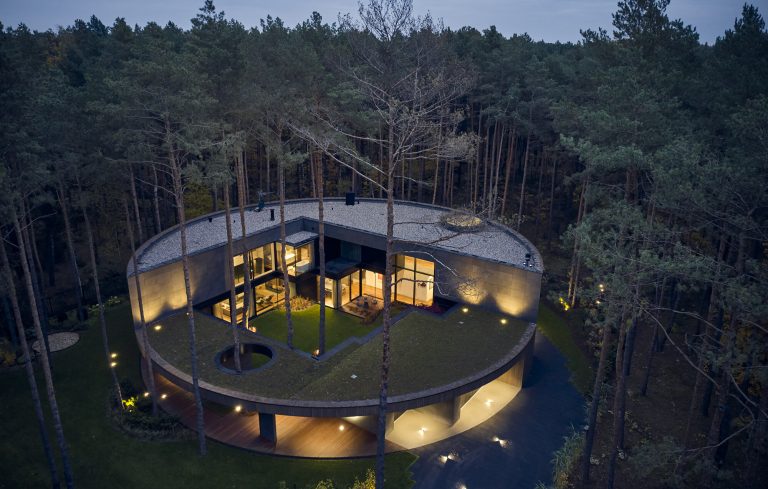
True luxury starts with what money can’t buy

You can’t buy more time and you can’t duplicate a good address. Therefore, the modern premium real estate market increasingly sells not so much square meters, but comfort and quality of everyday life. What counts is location, peace, safety, wellness and comfort.
Today, developers are building their projects on these values, and investors are looking for properties whose advantage will not disappear with changes in market fashion.
Just a dozen or so years ago, the attractiveness of an apartment was determined to a much greater extent by the location and its physical parameters than today. What mattered was the area, number of rooms, balcony, parking space and standard of finishing.
Today, this way of thinking is increasingly giving way to another. As our lifestyle changes, expectations towards the space we live in also change. For some affluent clients, the value is not only the location and space itself, but also the time that does not have to be wasted on commuting, the opportunity to rest without leaving the building, and privacy, which is difficult to find in dense urban development. A good address begins to be more than just prestige – it can mean a specific quality of everyday functioning.
– Today, luxury is defined differently than a dozen or so years ago. It is no longer just a symbol of status or possession of unique items. Health, well-being, privacy and time are becoming real luxuries – time for yourself, family and friends in an increasingly over-stimulated world. – architect Bartosz Trzop from the Trzop Architekci studio told “Wprost”.
This change causes the boundary between housing and a broadly understood lifestyle to become blurred. A premium apartment is not only supposed to provide space in which you can live. It is also supposed to respond to the needs: to enable rest, keeping fit, contacts with other residents, and sometimes also the use of services that until recently were associated primarily with hotels.
– Real estate is no longer just a place to live or an investment of capital. It becomes a space that has a real impact on everyday life, comfort, peace and the way we function – Tomasz Karpiel, COO of Angel Poland Group, told “Wprost”.
As a result, modern luxury is increasingly difficult to include in the price per square meter. The value of the property – apart from the location and the quality of architecture – is also determined by what cannot be easily added after construction is completed: the context of the place, privacy or the way the entire surroundings are designed. This is why new premium projects increasingly resemble complete living environments, not just apartment complexes.
– Buildings that will be valuable in 20 or 30 years are not only those made of the best materials. These are primarily places that support health, relationships, peace and everyday human functioning – Tomasz Kozak, vice-president of the management board of PROFBUD, told “Wprost”.
These changes do not remain only at the level of declarations. They can be seen in projects where the common area is no longer an addition to the apartment, but becomes one of the most important elements of the entire investment.
The apartment is just the beginning
A good example is NOHO ONE, being built at Rondo Daszyńskiego in Warsaw. The project shows how developers are trying to expand the definition of an apartment today: apart from the premises themselves, they also offer an extensive range of common functions. In the first stage, over 1,500 sq m are planned. space including, among others, places for activity and regeneration, SPA, coworking space, library, cinema and club areas. In addition, there are services available via the application. It is still difficult to assess how intensively residents will use them, but the direction is clear: some of their daily needs are to be met within one investment.
In practice, this means that some of the needs that until recently required leaving home can be met in its immediate surroundings. This is time saving – one of the most desired forms of luxury today.
The address itself is also important. NOHO ONE is being built near Rondo Daszyńskiego, in a part of Warsaw that has undergone a significant transformation in recent years and has become one of the most important business centers of the city. The proximity of offices, restaurants, services, as well as good communication make the location not only a matter of prestige, but also of everyday convenience.
Luxury needs a breather
In densely built-up city centers, what is often missing in the city is becoming increasingly valuable: silence, greenery and the opportunity to relax without giving up the urban lifestyle. This is well demonstrated by Murano, the Warsaw PROFBUD project at ul. Anielewicza, next to the Krasiński Garden and the POLIN Museum.
The architecture and layout of the investment were subordinated to the idea of creating space not only for living, but also for rest and meetings. The project includes, among others: neighborhood terraces, greenery and solutions related to the activity and regeneration of residents. The concept is complemented by “eight zones”, including: health, relationships, movement, nature and culture.
It’s not just about the accumulation of amenities. What is more important is to connect them to the location. The resident remains in the heart of the city’s urban development, but at the same time can benefit from the green surroundings and spaces designed with relaxation in mind. In the premium segment, this combination – urbanity without sacrificing privacy and peace – becomes one of the most difficult advantages to copy.
A house resembling a hotel
The line between a luxury apartment and a five-star hotel is becoming increasingly blurred. Today, a premium segment customer expects not only good architecture and a high standard of interior, but also service that reduces the number of daily duties. The Upper House by Angel in Wrocław is an example of an investment in which solutions known from the hotel industry become part of the residents’ experience.
The investment concept combines the residential function with solutions typical of the hotel segment. Concierge services and shared space facilities, as well as the location in the city center, play an important role here. This is a model in which some duties can be delegated, and the apartment becomes a base that allows you to take advantage of the city’s offer without giving up the privacy of your own space.
This is another example of what modern luxury means more and more often reclaiming time. Today, high standards do not have to be visible in splendor. It may manifest itself in the fact that someone else will take care of matters that previously had to be dealt with on your own.
Different faces of prestige
The modern premium segment does not have one model. For some it will be an apartment in the city center, for others – a property that allows regular contact with nature and relaxation away from the city rhythm. This is also visible in INPRO projects. This developer’s offer includes both urban investments in the Tricity and holiday apartments in Mikołajki.
This shows that it is increasingly difficult to talk about luxury solely through the prism of square footage or finishing standard. Context matters: where the property is located and how it can be used by that location. For one buyer it will be the proximity of a business center, for another – access to the sea, lake or green areas.
This uniqueness of the place may be important not only for the comfort of residents, but also for the long-term attractiveness of the property.
In the case of premium real estate, it is not only the apartment itself or the standard of the building that is important, but also how its immediate surroundings are changing. For example, whether the project is part of the process of transforming this part of the city, which has been undergoing subsequent stages of revitalization in recent years.
This is why in the luxury segment “location” increasingly means more than a prestigious address. What also matters is the character of the place, its architecture, neighborhood and prospects for further development. This element cannot be replaced or modernized after a few years – just like apartment furnishings.
A property that is resistant to fashion
There is another side to this story. It is true that you buy a premium property to live in it, but for some buyers the question of what will happen to its value in a few or a dozen years is equally important. And this is where the simple story of the “expensive apartment” ends. A high standard alone is not enough if you can easily find dozens of similar properties.
The market shows that the increase in real estate value is not automatic today. According to CBRE, in 2025 the prices of luxury apartments increased by 4-5%, but buyers needed more time to make a decision and negotiations became a more important part of the transaction. The premium segment is still developing, but it no longer rewards each project to the same extent.
For an investor, this means having to look not only at what the property offers today, but also at features that are difficult to reproduce in other designs. A good address, a unique view, the proximity of greenery, the quality of architecture or the limited possibility of creating similar projects may turn out to be more important than another list of amenities.
– Investors today think long-term. They are looking for projects that will not only be attractive today, but will also maintain their value in the future. And it is the uniqueness, quality and context of the place that determine whether a given property will be resistant to market changes – said “Wprost: Tomasz Karpiel, COO Angel Poland Group.
In this sense, luxury real estate begins to resemble a product whose value cannot be reduced to the price per square meter. If its attractiveness is determined by features that cannot be duplicated, the way we look at it as an investment also changes.
The most valuable features of a luxury property are often not the ones that can be added to the sales brochure. This is time you don’t have to waste on commuting. Peace of mind that can’t be bought later. A view that cannot be found anywhere else. An address that cannot be duplicated.
Therefore, the future of the premium segment does not have to be determined by who will create the most impressive building. Projects that answer a simpler, but much more difficult question will likely win: Will it still be possible to say that living in this place is good in a dozen or so years?